
Too much writing advice from the old masters of the craft had “girl boss, gaslight, gatekeep” energy. Quotes like Ruth Rendell’s “”I want to be a writer. What should I do?” I tell them to stop writing to me and get on with it.” Or the often attributed to Hemmingway quote; “simply sit down at the typewriter, open your veins, and bleed” are both not helpful and a little insulting.

They seem to imply that the writer just does it. A real writer, with whatever magical, innate component that makes them this genius and elusive thing, can just sit down and write. They all admit that first drafts are messy, editing is essential, etc, but they don’t provide any useful framework for developing the craft.
The other end of this spectrum is $60,000 writing courses from universities. I think they’re a load of crap too, but for different reasons. While I think they’re probably a great time and you get a lot of valuable relationships, they’re not worth what you pay for them (in my opinion, as someone who never attended one and never tried to.)
The happy medium, I believe, is honestly sharing the tips and tricks you use to get better at writing and how you make the time to do it. This information is free all over the internet, and most of it is the same. At the end of it all, you’ll discover that no one author’s method is the answer to your writing block, but you may have a useful arsenal of options to help you craft your own, custom writing process. So, here is the menu I use to sit down and write.
Sometimes I am just inspired and that’s all there is to it.

There are a few magical days a year where I feel like Jo March in the attic scene at the end of Little Women. Somehow I just know exactly what I want to say and I can say it for hours. This is not a helpful trick or tip, but it does fuel the backbone of my writing life. I know these days are possible and they’re more likely to happen if I have been dutifully plugging away on a disciplined approach to writing. They account for the lion’s share of my word count, so they’re important days.
Outlines and Plot Maps
I used to write by the seat of my pants and just let the story tell me where we were going on any given day. I wrote my first novel that way. Unsurprisingly, it was chaotic and not in a fun way. So I began to really invest my time in an outline.
My outlines are prescriptive, but they aren’t infallible. I frequently make changes after I find myself someway down the road. However, having a full outline gives me something to work on every day, so I don’t have to battle a creative drought to get an idea for the scene. My outlines usually emerge from a creative, hyperfocus period, which is very useful.
Plot maps are like outlines, except that I use them to plot out important interactions or moments between characters. So I have a romance plot map, an internal journey plot map, and a villain plot map, which helps me know where my characters are supposed to be at any point in the story. Doing this work ahead of all your writing gives you direction from the start.
List Scenes and Tropes I want to use
Sometimes I just want certain things to happen. These may not be included in my outline, since they’re pretty minute details, but they have their own category in each outline section, so I have some concrete things I know I want to include.

For example, I want to include “one bed” trope during a travel sequence. On my outline, I would say “they stop at an inn for the night, conversation about a pressing issue, leave the next morning.” But in my list of scenes or tropes to include in that sequence, I’ll add “one bed, they fight about who sleeps on the floor, tension ensues, they agree they both need to be well-rested so they’ll share the bed at a safe distance…”
Plan the scene for the day
When I sit down to write for the day, sometimes I will write a short paragraph about what I want to do. “She goes for a walk, is cornered by bad guys but fights them off. Drawing attention, she is brought to the palace and meets the King, who proclaims her the lost heir of the monarchy.” I will also do this at the end of the day when I am done writing, but know where I want to go tomorrow. My creative juice is still going but my hands are cramping and I want to go to bed. Rather than lose that momentum, I just plot the next day’s work and then move on to bed.
Create the “write” atmosphere
If you need help getting in the zone, develop a writing atmosphere. For me, this includes things like a clean desk, a cup of tea, some instrumental music, and my brain waves app. I also make it a point to remove all notifications on my desktop and phone, turn on Do Not Disturb, and block social media for a few hours. After all that work, I may do nothing more than write ten words and stare at my cursor.
What you need to remember about any attempt is that you’re building discipline and prioritizing yourself creatively. That doesn’t guarantee results, but it will train you and your body to recognize the signals for creativity. Routines are really helpful for your brain, and it is doing more work than you realize. I’ll often get into my atmosphere and just stare for a while, thinking about the book and a million other things. Two days later, all that processing results in a great idea.

Read often and widely
This Stephen King quote sums it up nicely; “If you want to be a writer, you must do two things above all others: read a lot and write a lot.” I call reading “research.” It fills my well with good ideas, shows me how other writers are tackling certain subjects and styles, and gives me a sense of what readers want. I read popular books and unknown books, books inside my genres and books outside of it. I try to read about 15 books a month.
On months where I read more, I write more. When I’m not reading, I write less. I think the evidence, in my case at least, is pretty convincing. Some exceptions; I do not read books that feel too similar to mine while I am writing mine. I don’t want to steal ideas and lose my originality or feel like my work is stupid and can never compare to this finished product and give up. Sometimes I read books that are similar on accident, but they mostly just help me feel inspired. I’m not afraid of being like someone else and I know my own ideas will make the book special.
Set weekly word counts
I don’t do daily counts only because I can’t write every day. I have a job, a house to clean, friends to hang out with, and a partner I like talking to. But weekly word counts give me something to chip away at when I have time. Maybe I’ll do ten words on Tuesday, 100 words on Wednesday, and then 1000 words during some free time on Friday. Or, I’ll write all 2000 words in one Saturday morning. The formula to get there doesn’t matter, but it is a goal you can use to orient yourself and define success. Even if your word count is low (sometimes I only try to write 500 words a week!), accomplishing your goal feels good and helps you move forward.
Forgive yourself for not writing that day
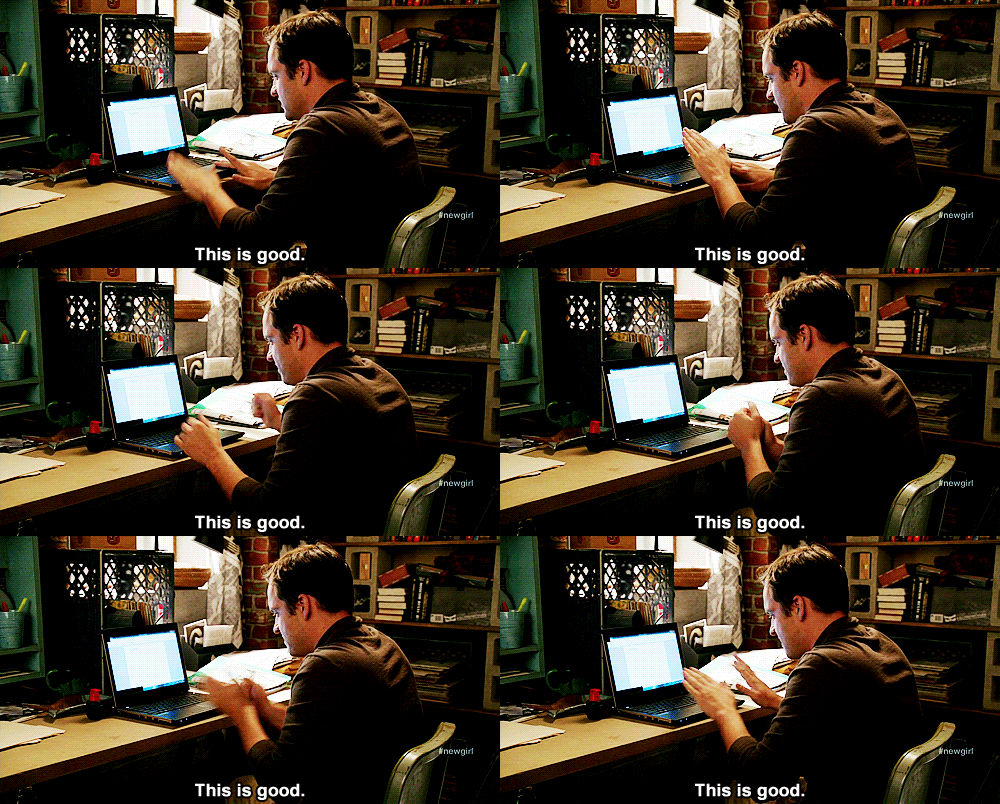
Guilt makes you a worse writer, generally speaking. If you feel bad you didn’t write at all one day, you are more likely to skip the next day because of a shame spiral. So, just let those days pass. Perhaps they’re a processing day, and your next big idea is brewing but not ready yet. Maybe you just need a break. Maybe you need a week to really read and consume TV shows to fill your tank. Maybe this just isn’t your year. No biggie. If you forgive yourself and let yourself build the discipline without demanding results, your time will come.
Skip the hard stuff
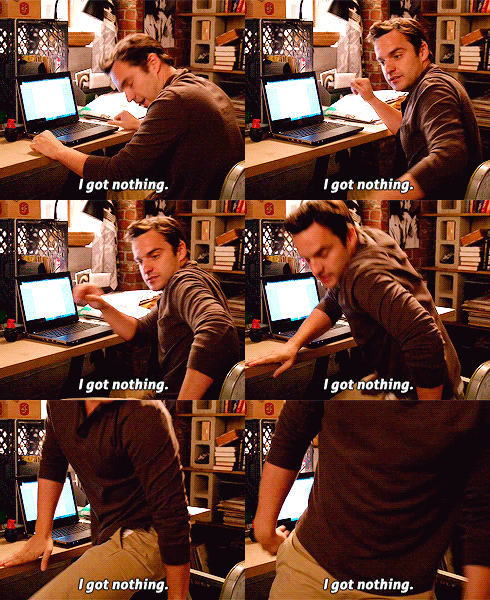
If you get to a scene and you think “I’m stuck, I don’t know how to write this yet.” Skip it. You heard me, pass it on by. Write in brackets {they fight and this guy wins, write later} and then move onto the scene you already know more about in your mind. I use the phrase “write later” consistently throughout my manuscript so a quick search will help me find all the unwritten parts later.
If you dwell on the hard stuff too long, you’ll get stuck and lose momentum. Odds are, you just need more time or research to get it done, so give yourself the gift of skipping.
Don’t edit yourself and don’t worry about being brilliant
If you’re trying to be smart, you’ll never get anywhere. If you’re trying so hard to make sure all your themes and concepts and most brilliant writing are displayed on every page, you won’t make a lot of progress. Just get your story down, mistakes, awkward writing, and all. You can weave in your themes and smart phrases later once you’re more sure your story structure can withstand the storm. If you’re panicking about declensions and participle phrases, you’ll get lost in the weeds. Let the grammar excellence come later.
Those are my top 10 writing tricks that help me write consistently. I hope this helps you expand your writing menu and find out what works best for you. Share in the comments if you have some tips and tricks that you use to get in the zone!

 Author Renee Savage
Leave a comment