
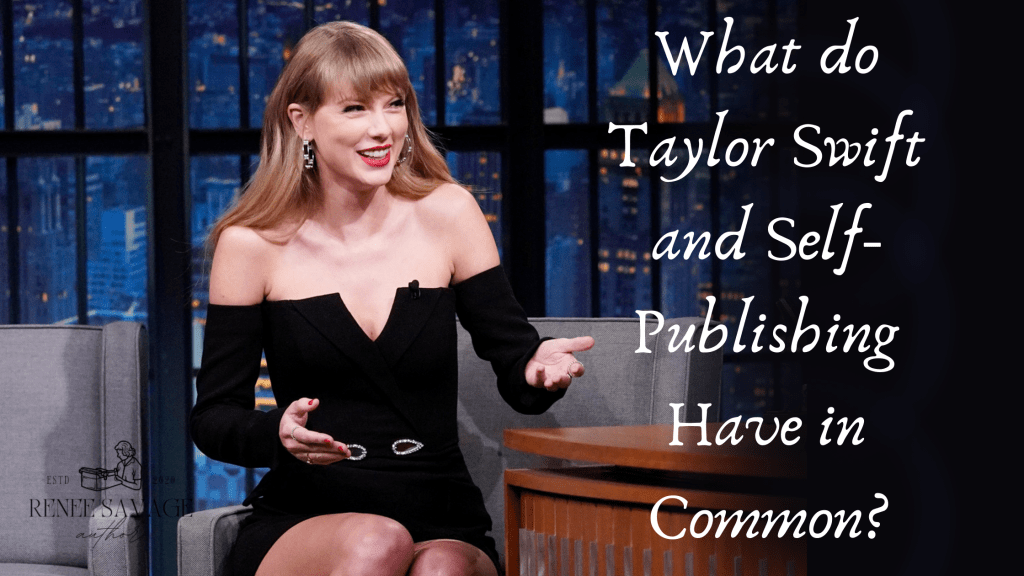
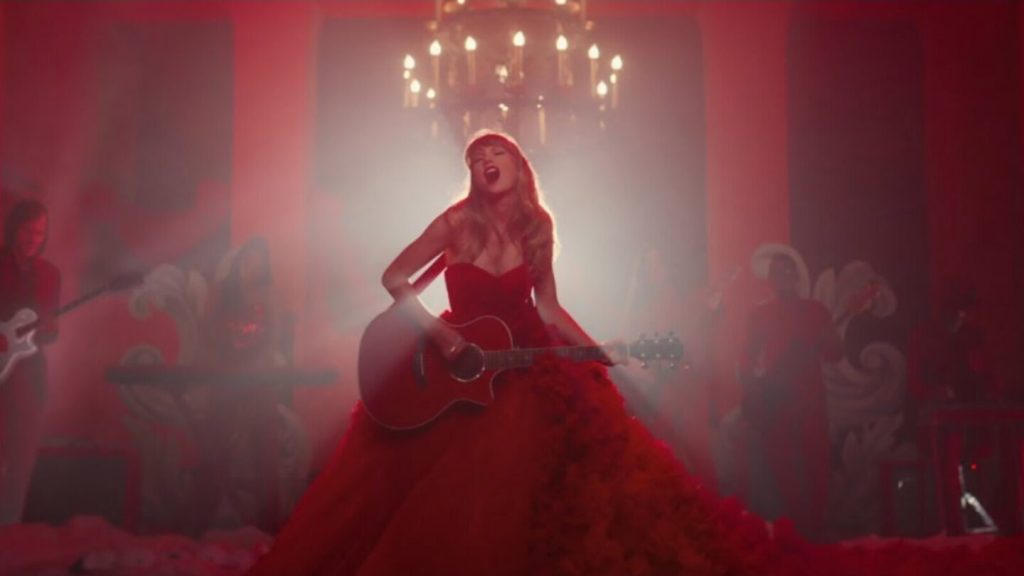
I’m still reeling from the release of Red (Taylor’s Version) and the 10-minute All Too Well that literally shook the nation this past weekend. I loved getting the chance to relive the release period and of course, I am excited to listen to it going forward as I have vowed to only listen to Taylor’s Version for all things. Sc***** Br*** will get nothing from me if I can help it.
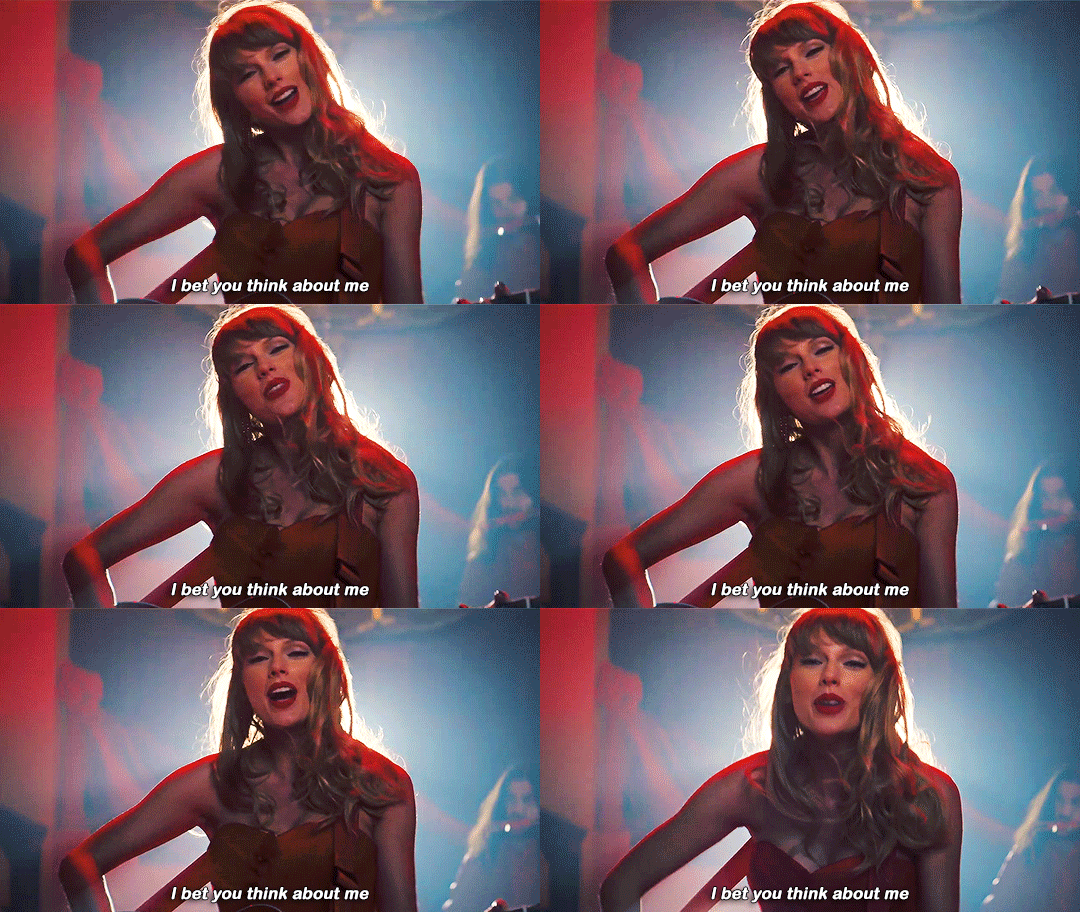
But it got me thinking about why I have decided to pursue self-publishing for my books rather than dedicating my time to the query process of traditional publishing. It turns out, Taylor Swift and self-publishing have something in common.
Ownership of your work.
Now, I am not making a comparison between my writing and Taylor’s. I genuinely believe Taylor is one of the great writers of our age. I’m just here to have a good time. But her fight for ownership of her masters is changing the game for artists who have been at the mercy of corporate producers for generations. Since the music industry began, wealthier interests have coerced artists into giving up ownership of the produced work in exchange for the monetary support needed to create the work in the first place.
If it was just about who gets credit for the work, this wouldn’t be such a big deal. We will forever recognize her music as “Taylor Swift.” No one will hear the original All Too Well and think “Man, Big Machine did such a great job on this song” or say “This song owned by Shamrock is really deep!” Credit for the work, however, isn’t what is valuable about it.
What is ultimately valuable about work is your freedom to utilize it and the resources you receive in return. When Taylor wrote the original Red, she signed over the ownership of the album to Big Machine, which they then publish on CDs and online. They receive all the proceeds from the songs and cut Taylor a check in return. This process has made her a very wealthy woman, but it limits what she is allowed to do with her music. This only gets worse for her when those masters are put up for sale, further restricting her access and use of the music.

But what does this have to do with self-publishing? Traditional publishing follows the same formula for writers that the music industry uses for musicians. For many authors, what looks like the opportunity of a lifetime becomes a contractual prison.
Authors receive an advance (from three figures to eight! That’s a huge range!) in exchange for the rights to their book. That advance is broken up into payments, negotiated by your agent. The first payment will be given on the sale of your book. The second will be paid when the book is edited, and the third will be paid upon publication.
However, in publishing, you lose creative control of your book. Although you have a lot of experts working on making it good, you ultimately have no voice in the cover art, the publication date, and many creative choices are pushed upon you by the editor. Do they know what sells? Yes and no. Publishing as it currently exists is a bit of a dinosaur and according to some sources, they don’t analyze their own data very well. Will their input make your book better? Maybe. Will you always be happy with the final product? Who knows.
They can delay publishing for any reason. They can print 100 copies and decide that is enough, never giving you the chance to earn royalties or re-publishing that story. They may decide not to market your book, and when it fails to reach your target audience, declare you a failure. And other than spending your own money on marketing, there is nothing you can do about it.
So, self-publishing starts to look pretty good! Yes, you will have to invest your own resources into your book, and you don’t know how it will do in the vast sea of books available online, but you can do whatever you want with that book. If it doesn’t sell well, you can take it down, rework it, and try again. If it sells really well, you can invest some of your profit into printing real copies and distribute to libraries and book stores or even sell it to a traditional publisher.
You’re in control of the publication date, the art, the story, and the people who help you work on it. You hire editors, and if you don’t like them, you fire them! You aren’t stuck with whoever the publisher assigns you.
With Taylor pursuing republication of her work, she is saying that ownership, for all its risks and rewards, is important to her. This may seem like a petty fight for Taylor to wage, but it has a ripple effect on the artists coming after her. Olivia Rodrigo signed her first contract and spoke openly about how watching Taylor Swift fight for ownership showed her how to negotiate for her own work. Many other artists will now have the leverage to do the same. There is enough money in both the music industry and publishing to give artists more control over their work.
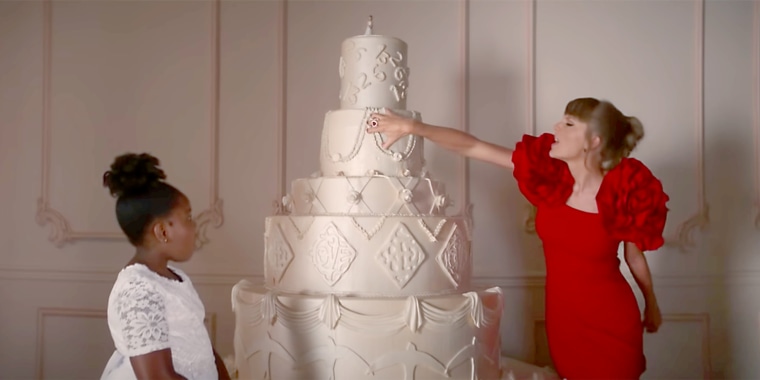
Let’s face the facts though; creating art like music and books, is a profit-driven game. If you aren’t making enough money to cover the costs of the production, you’ll eventually have to call it quits. When you sell a book to a publisher, ultimately, they’re assuming all the risk for that book. They will invest far more into it than just your advance. They pay for the raw materials to produce the book, time and labor to finesse it, and the team to market and roll it out. And if they don’t meet projected sales targets… all that is money lost.
In self-publishing, I don’t have the resources that a Big 5 publisher has. I’ll have to cut corners and hope for the best with my first few books. It’s easy to sit back and worry “what if no one likes it, and what if I waste my money getting this story out into the world.” But if that could be true, then the inverse is also equally likely. “What if people really love it? What if I make a profit and enduring royalties off this book for a while? What if I get noticed by a traditional publisher and can live out my author dreams?”
What if, when I release my version of my work, I can be proud of what I accomplished and experience all the rewards?
So, I charge on ahead. Like Taylor, I am excited about a future where I own my own and can do what I see fit with it. Perhaps I have an All Too Well on my hands, or maybe it’s just Girl at Home. Either way, her journey has inspired my own creative endeavors and I’ll always be thankful to her for that!
 Author Renee Savage
Leave a comment